






Lookbook A/W 26-27

Long-sleeve nightdresses

The cuff tells you more than the sleeve

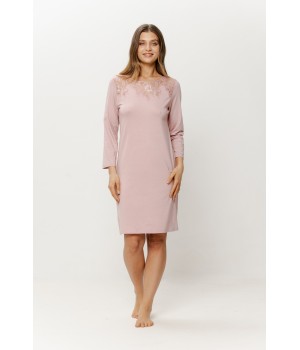
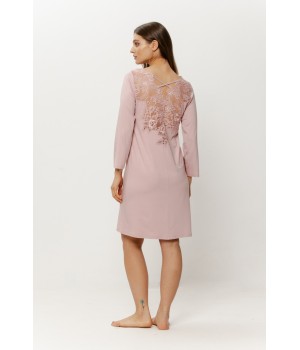
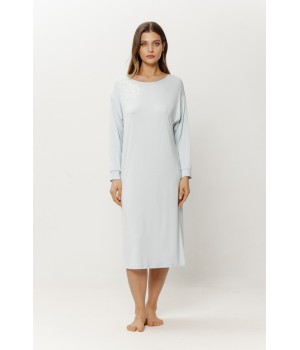
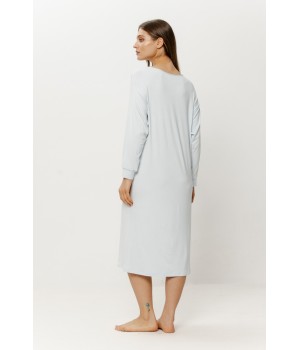
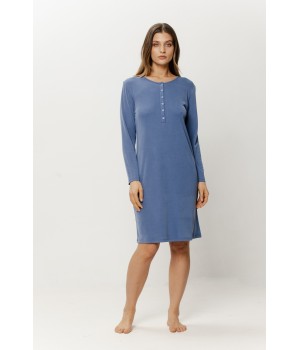
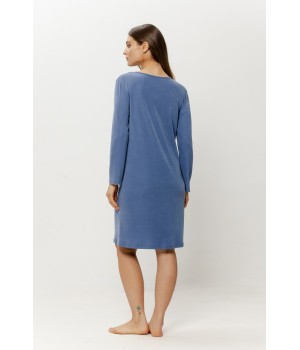
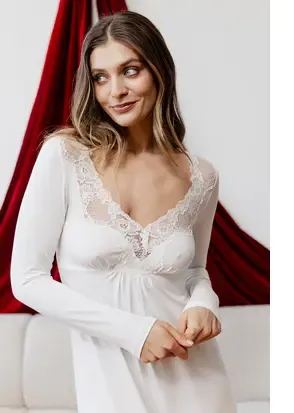
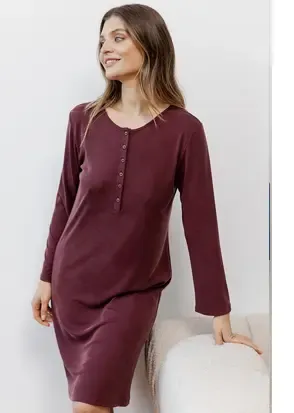
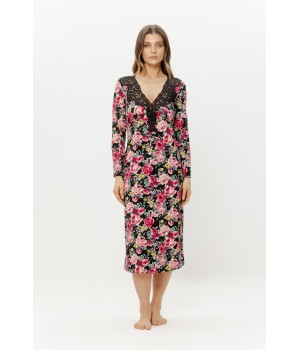
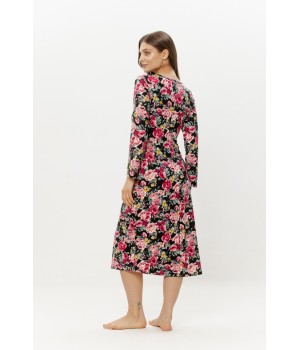
Coverage to the wrist is only half the information. What matters is how the sleeve ends. A ribbed cuff grips the wrist and stays there through the night; a raw or rolled edge moves with the arm and gathers higher as you turn. In this selection, the long-sleeve models divide along that line. The straight-cut, long-sleeve T-shirt-style nightdress in micromodal and lace holds a controlled line at the wrist, which makes it the more composed choice for reading upright or moving between rooms. A wider sleeve gives the arm more air and less constraint, at the cost of staying precisely in place.

Micromodal, viscose, and satin: three different nights

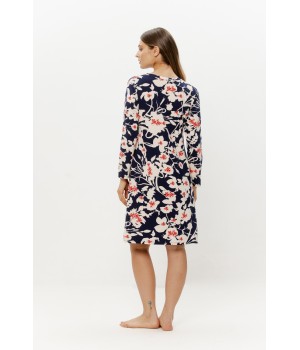
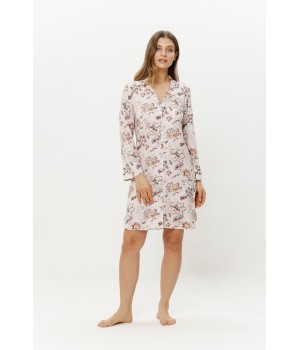
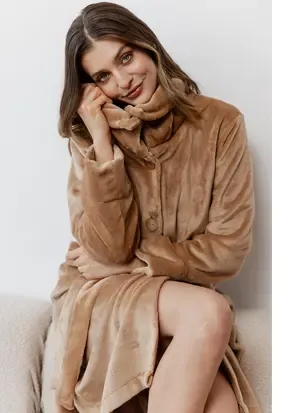
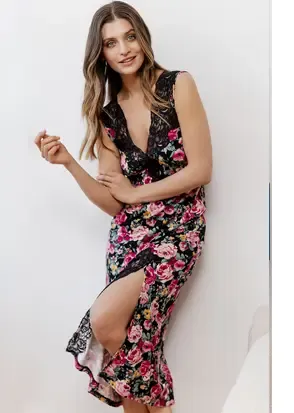
Each long-sleeve style in this range gains its character from the base cloth. Micromodal sits close without pressing, and its even surface carries colour with a calm, matte depth. It is the right point of comparison if you want the sleeve to feel like a second skin. Viscose, seen in the floral long styles, moves more freely — the sleeve glides over the arm rather than resting on it. Satin introduces a cooler contact and a slight gloss, which shifts the whole mood of a white-lace model. Your choice is not between 'good' and 'better' fabrics; it is between degrees of movement and temperature against the skin.

Neckline and lace: where the eye lands

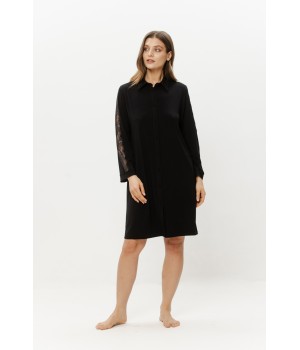
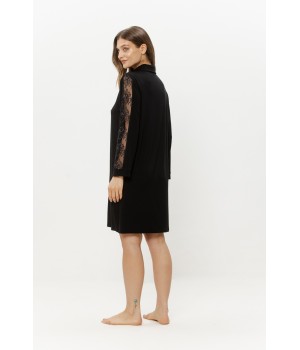
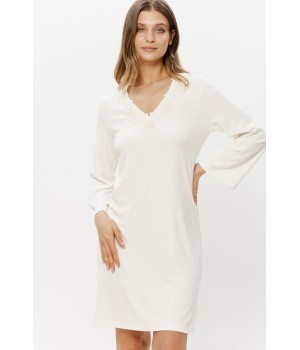
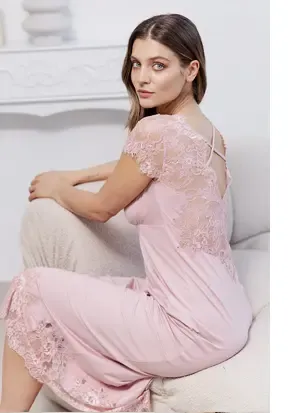
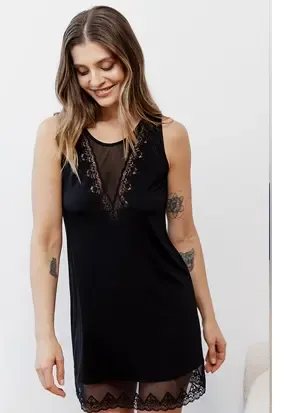
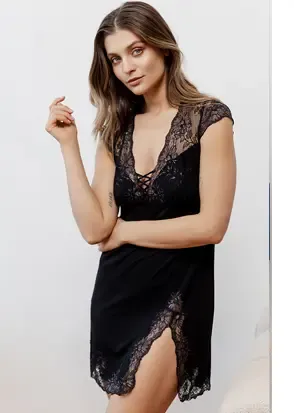
Lace on a long-sleeve nightdress works as a directional cue. A V-neck trimmed with fine lace pulls attention toward the collarbone and opens the chest; a higher T-shirt neckline keeps the frame quieter and warmer. The placement changes more than the look. Lace at the hem anchors the garment and gives the lower edge a deliberate finish. Lace at the cuffs ties the sleeve to the neckline and makes the arms part of the composition. Before choosing, note where the trim sits and ask whether it supports how you actually move at night.

One continuous line, or two pieces?

The comparison is not theoretical. In this range, the ladies micromodal pyjamas with a short-sleeve T-shirt top and long bottoms offer the same coverage split into two layers. The nightdress keeps everything under a single line, without a waistband. The pyjama gives you the option of removing the top while keeping the legs covered. If you overheat unevenly — warm through the torso, cool on the legs — the two-piece may be the more precise instrument. If any pressure at the waist disrupts your rest, the long-sleeve nightdress is the clearer answer.

Where length meets the sleeve

A long sleeve changes proportion. When the arm is covered to the wrist and the hem falls below the knee or to the ankle, the two ends of the garment speak to each other. A shorter body with a long sleeve — as in the sky blue satin dressing gown in this range — makes the sleeve the dominant feature. A longer body balances it. Your height is part of this equation; a hem designed for a taller frame will sit differently on you. Check where the fabric falls. The flattering long nightdress in micromodal and lace with short sleeves shows the same cloth in a shaped line, useful if you want the feel of long sleeves but prefer a different cut through the torso.

Rotation and the friction point

Long sleeves wear first at the elbow and cuff. Repeated pressure on a small area — the arm bent against the sheet, the cuff pulled back as you reach for a book — is where time shows. Alternating two nightdresses gives the fibres a pause between wears. A short-sleeve option in the same micromodal keeps the skin-feel consistent while sparing the long-sleeve model from nightly friction. This is not fragility; it is a reality of any knit worn against the body every night.

Long-Sleeve Nightdresses | Cut & Fabric Guide (58 chars)
There are 30 products.

Active filters

Boxed:

Sticky Add To Cart

Font: